

To be a good wildlife photographer, you require a skillfully skilled eye. Excellent ears help, too.
Melissa Groo discovered that early. Her non-traditional path to end up being an award-winning wildlife photographer began with listening.
Spurred by a deep interest about the method animals interact, she left a job in Ohio focused on school reform and moved to Ithaca, N.Y., to study with popular zoologist Katy Payne, an expert in the field of bioacoustics.
Throughout 6 years as a research study assistant with Payne at Cornell’s Center for Preservation Bioacoustics, consisting of 2 field seasons in the Main African Republic, Groo constructed a great deal of the abilities she ‘d come to utilize later on: waiting, enjoying and also listening.
A number of years later, when she took a digital photography class at a community college and became hooked on the craft, she understood she could integrate that brand-new skill with her work in conservation and her empathy for animals.
Today her work is represented by the National Geographic Image Collection. She composes a routine column for, is a contributing editor for Audubon and helped produce a Guide to Ethical Bird Photography with biologist Kenn Kaufman.
The Revelator spoke with Groo about why empathy is an essential skill in wildlife photography, the challenges of an ethical practice in the social media age, and her favorite shot.
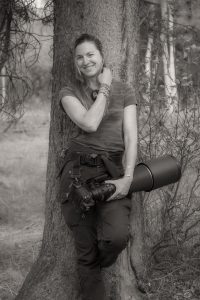
Wildlife photographer Melissa Groo. Image thanks to Melissa Groo What drives you in your work, and what do you hope individuals discover? The world has plenty of pretty images and digital photography has made unbelievable photography possible by numerous of us now. I feel that, specifically offered the state of the world and the environment, what’s needed more than just a lovely photo is a sense of advocacy and a real sense of preservation and empathy.
I’m very much drawn to the accuracy and sincerity in the representation of an animal and actually showing the challenges to that animal’s life or intriguing behavior that we have not seen much in pictures before.
I’ll do a fair bit of research study prior to I share a picture or prior to I talk about a particular concern because I’m frequently seeking to inform with my images about a specific difficulty that a species is dealing with or methods that we can much better support local wildlife.
For example, I deal with a wildlife medical facility and in some cases I go in to record human-caused disturbances to local wildlife. Let’s say an excellent blue heron comes in that’s been knotted in fishing line. I’ll photograph it when it is available in and then I’ll picture it later while it’s being dealt with and rehabilitated. And then I’ll picture the ultimate release.
I inform that complete story and then I use that story in a number of methods to attempt to inform individuals and give them information about how we can avoid things like this in our community.
That’s the important things with conservation photography. It‘s not practically when you click the shutter. It’s what do you finish with those images after, how you inform with those photos, whether it’s the words that you put with them or the hands you get those images into. You’ve written a lot about the principles of your field.
How do wildlife professional photographers make sure they aren’t harming wildlife?
It has to do with developing a caring and empathy for the topic into your fieldcraft. And I think that gets lost a lot in this day and age when social media is king and individuals are attempting to get the most “likes.”They’re cutting corners often at the expenditure of the subject. We desire to get close, as photographers, however we need to know how to lessen our interruption. It’s truly incumbent on us because wildlife face so numerous dangers and challenges from all sides.
I constantly recommend that people study their topic before they go photograph to find out about the stressors for this animal, their practices, the indications of alarm or distress and how can we be much better alert to those indications. People require to know if a particular animal is most likely to abandon its nest or its den if you’re hanging out there for hours.
As important as understanding the best settings on your camera is constructing that empathy and that care into your fieldcraft and truly believing whether a picture deserves it. To us, this is just about a picture. However to wildlife, each and every single minute has to do with survival.
It appears like some wildlife photography can actually be downright exploitative. How do we as audiences acknowledge those images?
I’m truly enthusiastic about the photography of captive animals and attempting to educate individuals on how to choose about what sorts of centers are ethical and truly do care for their animals. And what sort of centers, such as photography video game farms, are totally exploitative.
At these game farms wild animals are kept in small cages, other than when they’re trotted out for paying photographers. And when these professional photographers disappear with these images and they don’t inform the reality of these animals’ lives and they attempt to scam their viewers into believing this is authentically in the wild, it gives a lie to that animal’s life. And to me, it does an injustice to the animal in addition to the field of authentic wildlife photography.
Unfortunately the onus is on us now to distinguish ourselves from the regrettable practices that are an imperfection on the entire field of wildlife photography, like baiting of raptors. I believe it’s really important for individuals to give precise and truthful captions and to let people understand how you got a shot. It’s one way to stand apart from photographers who don’t care about animal welfare and will do whatever it takes to get that sensational shot that’s going to get them a lot of likes on social networks.
You at first entered preservation work since of your interest in noises, particularly how animals communicate. We think about photography as being extremely visual, but do you rely a lot on listening?
Yes, having actually learned the noises of birds has actually been an excellent tool for me. I live beside this huge state forest and I’ll drive through with all my windows rolled down and I’m listening so hard. When I hear a types that I’m interested in, I know that I can stop and invest time trying to track that bird down and attempting to picture it.
I also use the noises of other animals to notify me to something that I want to picture.
When I found this excellent horned owl because I heard all these crows mobbing something in the forest and I went running into the forest with my cam, and sure enough, they were mobbing an excellent horned owl.
Chipmunks have various chip alerting calls for aerial predators than they do for terrestrial predators. If I hear them giving that the unique call for aerial predators, then I know maybe there’s a Cooper’s hawk out in the lawn.
I believe it really assists you to be a much better professional photographer if you’re a biologist– even if you’re simply a real amateur biologist, which I consider myself.
Do you have a preferred species you like to photograph?
I love birds– just my yard birds– owls and all type of birds.
I’m likewise truly passionate about predators, especially wild pet dogs like coyotes and foxes. And wild felines, like bobcats and lions. I’ve never ever seen a lynx however it’s high on my list.
I’m fascinated with elusive predators. I feel there’s a genuine location for them in natural neighborhoods and I’m constantly trying to change minds about them. A great deal of people regard these animals– mainly bobcats, foxes and coyotes– as varmint. And that makes me insane. I think these are really unique animals and knowing that they are around me where I reside in upstate New York simply provides a lot magic and mystery and charm to the landscape.
I love to take a trip to Africa and photograph the elegant animals there. And I’ve loved photographing the spirit bear in British Columbia. But my preferred picture of all time was taken 2 miles from my house because it was two miles from my house. Likewise because it illustrates a bobcat mother and her package nuzzling each other. It’s such an uncommon photo and it’s such an uncommon minute in the wild to have actually had the ability to peek and to have actually captured on movie.
It’s those moments that I live for.
The post appeared initially on The Revelator.
This content was originally published here.
Pingback: Instagram URL Shortener
Pingback: wix seo
Pingback: wix seo experts
Pingback: ragnarok private server 2025
Pingback: life expectancy of chiweenie
Pingback: French Bulldog Texas
Pingback: French Bulldog puppies in Houston
Pingback: french bulldog rescue
Pingback: dogs papers
Pingback: french bulldog adoption
Pingback: viet travel tours
Pingback: french bulldog texas
Pingback: merle french bulldog
Pingback: fart coin price
Pingback: frenchie chihuahua mix
Pingback: floodle puppies for sale
Pingback: crypto news
Pingback: best probiotic for english bulldog
Pingback: French Bulldog For Sale
Pingback: French Bulldog For Sale
Pingback: blue color french bulldog
Pingback: playnet download
Pingback: golf cart rental isla mujeres
Pingback: floodle puppies for sale
Pingback: French Bulldog Adoption
Pingback: French Bulldog Rescue
Pingback: french bulldog chihuahua mix
Pingback: sugar land seo company
Pingback: Dog Papers
Pingback: Dog Papers
Pingback: How To Obtain Dog Papers
Pingback: Dog Breed Registries
Pingback: Dog Papers
Pingback: mexican candy sandia
Pingback: bjj jiu jitsu magnolia texas
Pingback: brazil crop top
Pingback: french bulldog shop
Pingback: we buy french bulldogs
Pingback: dog probiotic chews on amazon
Pingback: joyce echols
Pingback: wix seo
Pingback: 늑대닷컴
Pingback: sole mare vacanze t-shirt
Pingback: elizabeth kerr
Pingback: mexican candy store
Pingback: chamy rim dips
Pingback: candy factory
Pingback: modern warfare 3 cheats
Pingback: aimbot warzone
Pingback: mw2 cheats download
Pingback: esports
Pingback: best probiotic for french bulldogs
Pingback: french bulldogs for sale in texas
Pingback: micro american bullies
Pingback: yorkie poo breeding
Pingback: free video chat
Pingback: cheap video chat
Pingback: free adult webcams
Pingback: بطاقه ايوا
Pingback: houston french bulldogs for sale
Pingback: P+F
Pingback: atizapán de zaragoza clima
Pingback: cuautitlan izcalli clima
Pingback: condiciones climaticas queretaro
Pingback: culiacan clima
Pingback: french bulldog puppies near me
Pingback: how to get my dog papers
Pingback: cam sex
Pingback: free adult webcams
Pingback: nude chat
Pingback: Instagram URL Shortener